
Termipore Anti Termite Treatment
Termipore® System
What is Termipore® Anti-Termite Piping System?
The Termipore® Anti-Termite Piping System is an advanced, pre-installed solution designed to protect buildings from subterranean termite attacks. Instead of relying solely on surface spraying, this system delivers termiticides uniformly around the foundation through a network of specially designed perforated pipes.
It acts as a preventive barrier that lasts for years, ensuring your structure remains protected from within — right from the ground level.
When to Install TermiPore Reticulation System ?
Before
Secure at Foundation
Install at plinth/ground level
As you can see in the video, the Termipore Anti-Termite Piping System is installed before the PCC (Plain Cement Concrete) is poured. This step is critical for an effective and long-lasting termite pre-construction treatment. By placing the Termipore pipe around the foundation and along the key structural areas early in construction, we ensure that the chemical solution can later be distributed evenly throughout the soil. This method provides long-term anti termite protection in Nepal, especially in termite-prone zones like Bharatpur, Chitwan. Installing the system before PCC makes the layout smooth, avoids future excavation costs, and prepares your structure for safe and easy post-construction termite treatment. For anyone looking for reliable and professional pre-construction termite solutions in Nepal, Termipore is the trusted system that offers both convenience and durability.
Before
Secure at Foundation
Install at plinth/ground level
As you can see in the video, while the ideal time to install the Termipore Anti-Termite Piping System is before PCC (Plain Cement Concrete), it is also possible to install the system after PCC, especially for post construction termite treatment. In cases where the building is already constructed or the PCC has already been laid, Termipore pipes can still be installed along the wall perimeters and floors by making narrow grooves or trench lines. These pipes are then connected to injection points for regular chemical treatment. Though it may require more labor, Termipore pipe installation after PCC still provides a reliable solution for anti termite treatment in Nepal, especially in areas at high risk of termite attack. This method is widely used in renovation projects, hotels, hospitals, and homes where post-construction termite protection is urgently needed. Whether you missed the pre-construction stage or want to enhance your building’s defense, Termipore offers a permanent and professional alternative for long-term termite control.
Before
Secure at Foundation
Install at plinth/ground level
As you can see in the video, Termipore Anti-Termite Piping System is carefully installed along the outer periphery of the building foundation to create a protective barrier against termite invasion. This is a crucial part of termite pre-construction treatment, especially in termite-prone areas like Bharatpur and across Nepal. The pipe is laid around the external walls at the foundation level, before or after PCC depending on the project stage, ensuring thorough coverage. This allows termite control chemicals to be injected evenly around the entire outer boundary, keeping termites from entering the building from the outside soil. Even in post-construction termite treatment, the outer periphery installation helps protect the structure without disrupting the interior. If you are looking for long-term, professional anti termite treatment in Nepal, outer periphery Termipore pipe installation is a reliable and cost-effective solution for residential, commercial, or institutional buildings.
How to Install TermiPore Pipes ?
Installing TermiPore Reticulation System is a simple process. It is a simple network of pipes across the area, in a net like pattern.
Planning and Layout
Begin by designing the layout of the Termipore pipes, ensuring complete coverage around the perimeter of the building foundation, under floors, and near walls.
Maintain a pipe spacing of approximately 2 feet (60 cm) for uniform chemical coverage.
Ensure that no individual line exceeds 30 meters from the junction box.
Trenching
Dig a shallow trench (4–6 inches deep) around the designated areas before PCC or flooring.
Avoid routing pipes through wet areas such as bathrooms or kitchens.

Laying the Pipe
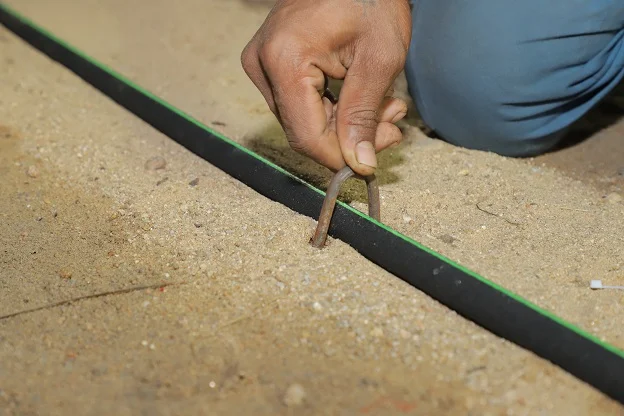
Place the Termipore perforated pipe in the trench with perforations facing down.
Use fixing hooks or clips to hold the pipe in position.
Ensure the pipe is not bent sharply, squeezed, or in direct contact with cement.

Connecting to Junction Box
Use a plain, non-perforated pipe to connect the Termipore system to the junction/refill box.
Avoid bringing Termipore pipes directly to the junction box.

Pressure Testing
Before covering the pipe, test the system by injecting water through the junction box using a 1 HP pump (0.3 kg/cm² pressure).

Backfilling
Once testing is successful, gently cover the pipe with sand, followed by flooring or PCC.
Avoid using heavy compaction directly above the pipe.

Testing After Installation – Termipore Anti-Termite System
Once the Termipore Anti-Termite Piping System is installed, it is essential to test the system before covering it with sand, flooring, or tiles. This ensures that the system is functioning properly and that chemical flow reaches all areas effectively.
Water Flow Test Instructions:
Inject clean water from the junction box using a pump of minimum 1 HP capacity or 0.3 kg/cm² pressure.
Continue pumping water for 15–20 minutes.
Observe the area along the Termipore piping – it should become uniformly wet, indicating that the liquid is reaching everywhere.
Flow rates may vary along different parts of the pipe. This is normal and not a cause for concern.
If Uniform Wetting Is Not Observed, Check the Following:
Pipe Squeezing at Bends:
Check if the pipe is bent too sharply or squeezed during installation, which can block flow.
Contact with Cement:
Ensure that the Termipore pipe is not in direct contact with cement, which can block the perforations and reduce flow.
Overtight Fixing Hooks:
Make sure the hooks or ties used for fixing the pipe are not too tight, which can restrict the inner diameter of the pipe.
Pump Capacity:
Confirm that a 1 HP pump with at least 0.3 kg/cm² pressure is being used for the test.
Pipe Length per Junction Box:
Verify that no more than 30 meters of Termipore pipe is connected to a single junction box. Exceeding this may lead to reduced pressure and flow.
Installation by Professionals is a Must
Though the system appears simple, we strongly advise against DIY (Do-It-Yourself) installations. Termipore installation involves technical nuances such as layout design, pressure balancing, and chemical compatibility that are best handled by trained professionals.
This is a one-time installation that protects your structure for decades.
Proper professional supervision ensures effectiveness, safety, and long-term reliability.
Chemical Use Precaution:
Use only approved liquid termiticides (e.g., Chlorpyrifos 20% EC or Imidacloprid).
Do not use powder-based termiticides, even if mixed with water. These can settle inside the pipe and cause blockages.
DOs
Install TermiPore on a bed of sand using fixing hooks/barbed clamp
Use the manufacturer's recommended layout pattern and spacing (typically 2 ft apart) to ensure full coverage.
Only fill the system with approved termiticides (e.g., Chlorpyrifos 20% EC or Imidacloprid) for long-lasting protection.
Before backfilling, conduct a pressure test to ensure no blockages or leaks.
Clearly mark the refill points and maintain a record for future treatments.
Ensure the system is handled and filled by trained professionals or pest control technicians.
Re-inject termiticide through the system at recommended intervals (typically every 3–5 years or as needed).
DON't
Avoid placing TermiPore pipes in direct contact with cement. Cement can damage the pipe’s surface and block the perforations, affecting the flow of termiticide.
Always use a plain plastic (non-perforated) pipe between the TermiPore system and the junction box. This prevents clogging and allows easy inspection or refilling.
Avoid placing the system in constantly wet zones such as bathrooms, kitchens, or near water tanks. Moisture reduces the effectiveness of the chemical treatment and may damage the pipe.
Never use powder termiticides in the system. These can settle inside the pipes and block the nozzles, disrupting uniform distribution.
SC formulations may contain undissolved particles that settle and clog the perforated pipes. Use clear liquid formulations instead, like EC (Emulsifiable Concentrate).
Before backfilling the trench, test the system with water or air pressure to make sure there are no leaks or blockages.
TermiPore is a long-term system, but it requires periodic refilling of chemicals. Skipping maintenance can leave the structure unprotected.