
Termite Information
What is a Subterranean Termite?
Subterranean termites are a species of termites that live underground and are known for causing serious damage to wooden structures. They build their colonies in the soil and create mud tubes to travel between their nest and food sources, such as wood found in buildings. These termites feed on cellulose, a natural material found in wood, paper, and plant fibers. Because they require moisture to survive, they often remain hidden in damp or humid areas, making their presence difficult to detect until the damage is already severe. Subterranean termite colonies can grow to include hundreds of thousands or even millions of individuals, allowing them to cause extensive destruction in a relatively short period. They are considered one of the most destructive types of termites worldwide and are a major concern for homeowners, builders, and pest control professionals.
Colony Structure
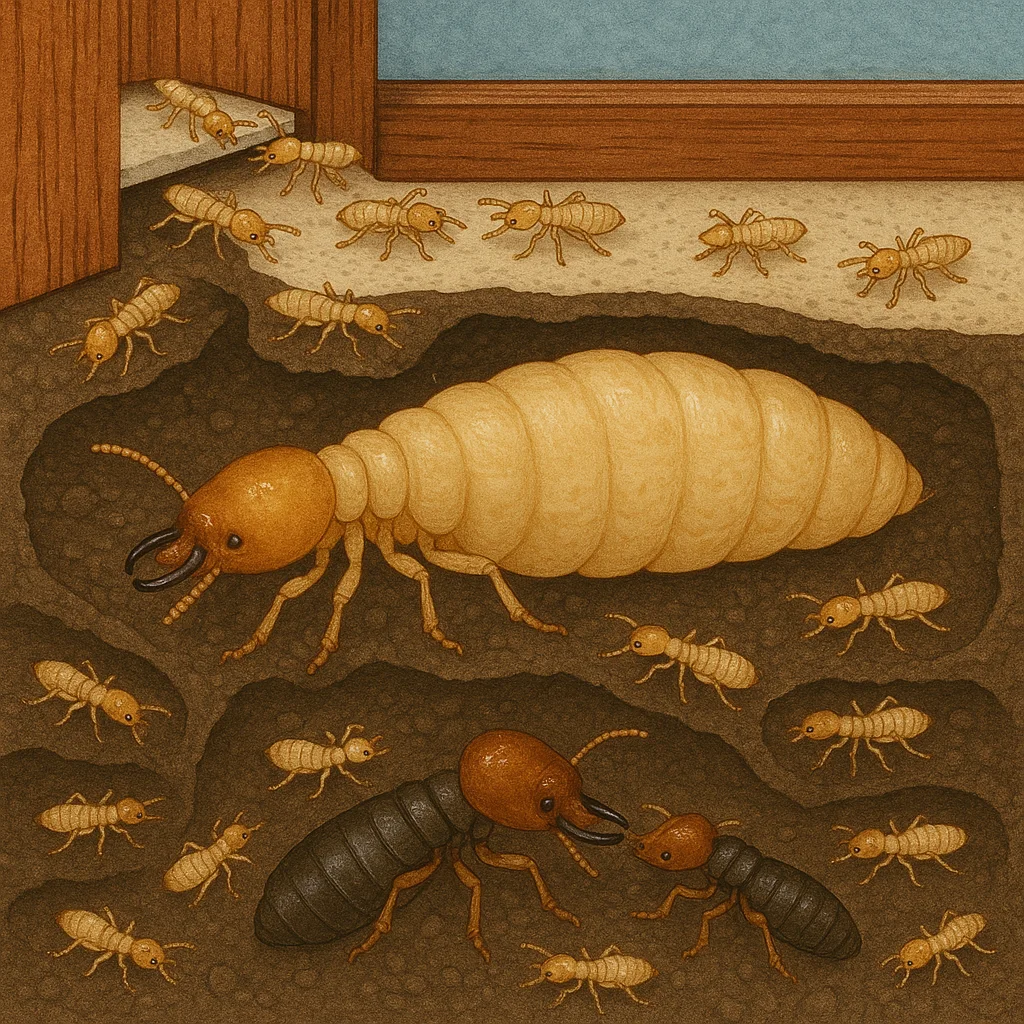
Termites are divided into castes, with each caste having a unique role:
Queen & King
The queen lays thousands of eggs per day and is the longest-living member (can live 15–20 years).
The king remains by her side to fertilize the eggs and help with early colony formation.
Workers
The most numerous caste.
Responsible for foraging, feeding other termites, building tunnels, and damaging wooden structures.
They are blind and wingless, and active 24/7.
Soldiers
Their job is to defend the colony, especially against natural predators like ants.
They have larger heads and powerful jaws or a sticky substance to ward off attackers.
Like workers, they rely on others for food.
Alates (Swarmers)
These are winged reproductive termites that emerge seasonally to start new colonies.
They shed their wings after mating and form a new king and queen pair.
Their presence indoors is a strong sign of a hidden colony
Termite Biology and Lifecycle

Lifecycle Stages
Eggs – Laid by the queen in large batches, hatch into nymphs in a few weeks.
Nymphs – Immature termites that gradually develop into different castes depending on colony needs.
Adults – Become either workers, soldiers, or reproductive alates.
The transformation from egg to adult can take a few weeks to several months, depending on temperature, food availability, and colony needs.
Damage caused by termites
Termites silently eat through:
Wooden beams and floors
Door and window frames
Furniture and cabinets
Paper archives and cardboard
Often, the structural damage is not visible from the surface and may only become apparent when major repairs are needed — costing thousands in damages.
Signs of infestation
Watch out for:
Mud tubes on walls or foundations
Hollow-sounding wood
Discarded wings near windows or doors
Peeling paint that looks like water damage
Tight-fitting doors or sagging floors
Early signs are often subtle — that’s why regular inspection is key.
Why early prevention is critical
Termite damage is not covered by most home insurance policies. Prevention is far cheaper than treatment after an infestation.
Using a Termipore Anti-Termite Piping System during construction provides a permanent underground barrier against termites. This long-term solution is safe, effective, and doesn’t require disturbing your finished building.
